Drowning Prevention in the Maldives: Protecting Lives Through Water Safety, Education and Prevention
Published by the Maldives Swimming and Life Saving Skills Training School (MSLSTS)
As the world prepares to observe World Drowning Prevention Day on 25 July, the Maldives joins the international community in promoting awareness of drowning prevention and reaffirming the importance of water safety, education, and preparedness.
The Republic of Maldives is an archipelagic nation in the Indian Ocean, comprising natural atolls and islands, of which approximately 200 are inhabited. Stretching across approximately 90,000 square kilometres of ocean, the Maldives is one of the world’s most geographically dispersed countries. For more than two millennia, the sea has shaped the nation’s history, culture, livelihoods, transportation, and economic development. Today, the ocean remains at the heart of the Maldives’ identity and supports one of the world’s leading tourism destinations.
Established by the United Nations General Assembly in 2021, World Drowning Prevention Day is observed annually on 25 July to raise awareness that drowning is a serious but preventable cause of death. Led globally by the World Health Organization (WHO), the campaign encourages governments, organisations, communities, and individuals to implement evidence-based measures that save lives.
According to the WHO, approximately 300,000 people die from drowning each year worldwide. Drowning is the fourth leading cause of death among children aged 1–4 years and the third leading cause among children aged 5–14 years. The WHO also reports that 92% of drowning deaths occur in low- and middle-income countries, demonstrating the need for sustained investment in prevention, education, and safer aquatic environments.
The WHO defines drowning as “the process of experiencing respiratory impairment from submersion or immersion in liquid.” Drowning may result in death or survival with or without long-term health consequences. Importantly, drowning is preventable.
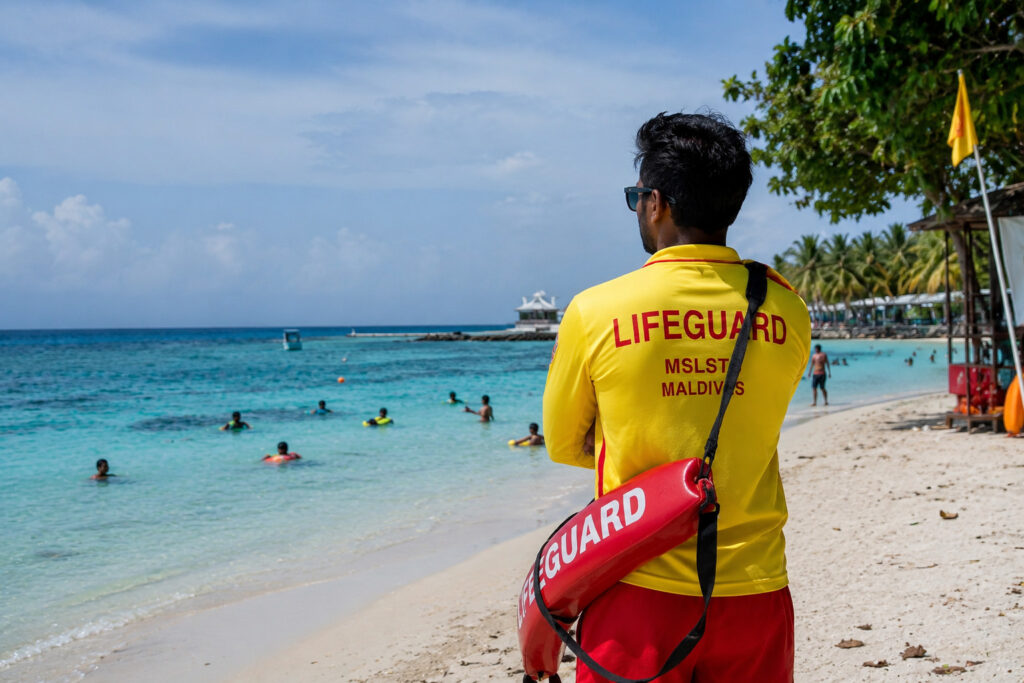
For the Maldives, where everyday life is closely connected to the sea, drowning prevention is essential. Residents and visitors regularly participate in swimming, snorkelling, scuba diving, boating, fishing, surfing, and other water-based activities. While these experiences contribute to the country’s unique appeal, they also reinforce the importance of understanding water hazards, respecting changing sea conditions, and adopting safe behaviours.
Evidence shows that effective prevention saves lives. Learning swimming and water safety skills, providing active supervision of children, wearing lifejackets where appropriate, employing qualified lifeguards, conducting aquatic risk assessments, and maintaining effective emergency response systems are among the measures recommended by the WHO to reduce the risk of drowning.
Preventing drowning requires a shared commitment. Parents, educators, boat operators, tourism professionals, employers, community organisations, and individuals all have an important role in creating safer aquatic environments. Every informed decision around water has the potential to prevent tragedy.
As World Drowning Prevention Day approaches, the Maldives Swimming and Life Saving Skills Training School (MSLSTS) encourages everyone to strengthen their commitment to water safety. Through education, professional training, public awareness, and the promotion of internationally recognised lifesaving practices, we can help build a stronger culture of prevention and protect lives across the Maldives.
The sea has shaped the Maldives for generations. By embracing knowledge, responsibility, and preparedness, we can ensure that it continues to be a source of life, opportunity, and enjoyment for generations to come.
Anyone can drown. No one should.
