Every rescue begins with a decision, and every decision begins with communication.
In lifeguarding, communication is far more than the exchange of information. It is a professional competency that influences prevention, leadership, teamwork, decision-making, and ultimately, the safety of human life. The words chosen by a lifeguard have the power to calm fear, inspire confidence, coordinate resources, and guide others through moments of uncertainty.
Many incidents are successfully prevented long before a rescue becomes necessary. A courteous reminder to a guest, a clear explanation of a hazard, or timely guidance to a colleague can eliminate risk before it develops into an emergency. Prevention has always been the highest standard of professional lifeguarding, and effective communication is one of its most valuable tools.
When an emergency does occur, communication becomes even more critical. Clear instructions, concise radio messages, and calm verbal leadership enable rescue teams to work as one coordinated unit. Professional communication reduces confusion, strengthens situational awareness, and allows every team member to focus on their responsibilities without distraction. In high-pressure environments, calm communication often creates calm decisions.
Equally important is the way lifeguards communicate after an incident. Respectful interaction with guests, colleagues, emergency responders, and management reflects professionalism, builds trust, and supports continuous learning. Every conversation is an opportunity to reinforce confidence in the organisation and in the profession itself.
Professional communication is also a reflection of character. It demonstrates emotional control, confidence, respect, integrity, and accountability—qualities that define exceptional lifeguards. Technical skills may enable a rescue, but professionalism earns trust. A lifeguard who communicates with clarity and purpose not only protects lives but also strengthens the culture of safety within every aquatic environment.
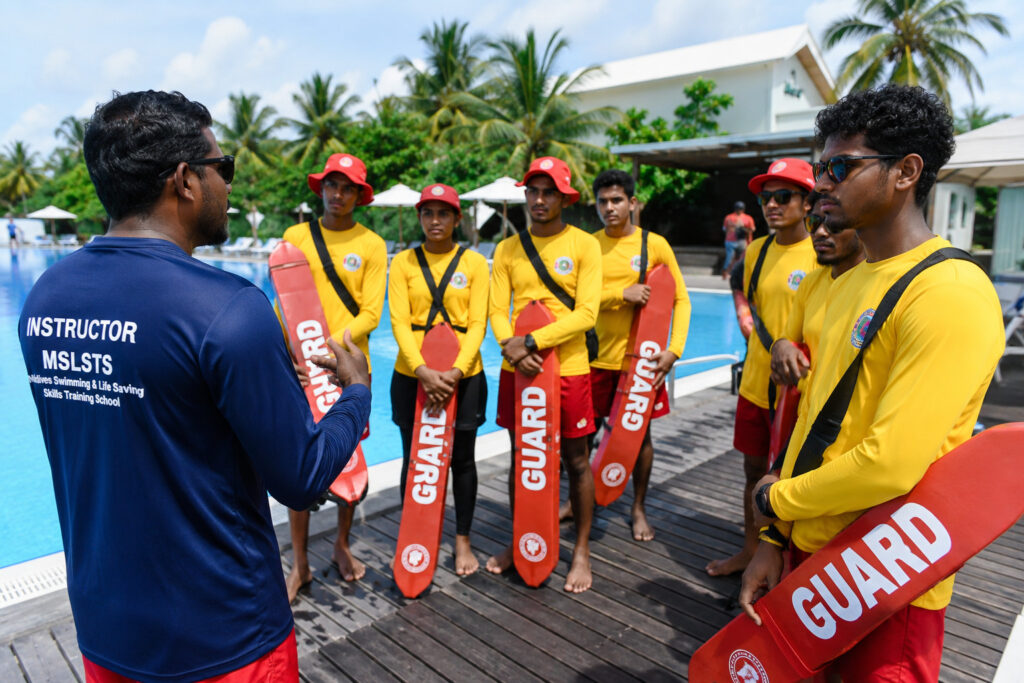
At the Maldives Swimming and Life Saving Skills Training School (MSLSTS), communication is recognised as a fundamental pillar of lifeguard education. Alongside internationally benchmarked rescue skills, our programmes develop leadership, teamwork, critical thinking, situational awareness, and professional communication, preparing lifeguards to meet the expectations of modern aquatic operations.
The true measure of a lifeguard is not only how well they respond to an emergency, but how effectively they prevent one, lead others, and communicate throughout every stage of an operation.
Choose your words with the same care you choose your actions. A professional lifeguard understands that both have the power to save lives.
“Professional communication does not simply support a rescue—it strengthens prevention, inspires confidence, and defines the standard of a true lifeguard.”